
Plant Library
Venus Flytrap Care Guide
Dionaea muscipula
By the Plantshop.com Editorial Team · Updated · How we research · Report an error
The Venus flytrap is a carnivorous plant from the Carolinas that catches insects with snapping traps. It is not a typical houseplant: it needs strong sun, mineral-free water and a cold winter dormancy.
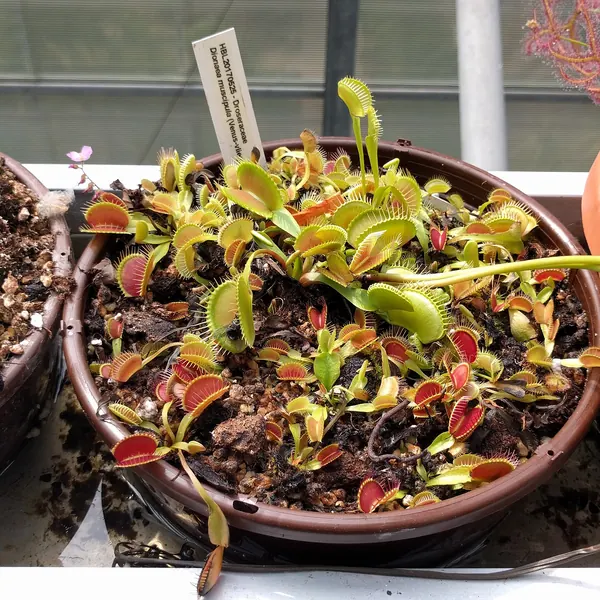
Plant profile
- Light
- Full sun: 4+ hours of direct light
- Water
- Keep wet with rainwater or distilled water only; stand in a tray
- Humidity
- High
- Pets
- Non-toxic to cats and dogs (ASPCA) [ASPCA]
- Difficulty
- Challenging
- Size
- Traps up to 1 in; rosette 4-6 in
- Growth
- Slow
Light
Full sun: 4+ hours of direct light. Rotate the pot every few weeks so growth stays even.
Water
Keep wet with rainwater or distilled water only; stand in a tray. Always use a pot with drainage holes and empty the saucer after watering. Plants use far less water in winter.
Humidity and temperature
Humidity: high. Most houseplants prefer 60-80°F (16-27°C) and dislike cold drafts and heating vents.
Soil and feeding
Use a well-draining potting mix with extra grit or perlite. Feed lightly in spring and summer with a balanced houseplant fertilizer at half strength; skip feeding in winter.
Our tip
Never use tap water or fertilizer, and don't trigger the traps for fun; each trap closes only a few times.
Common problems
- Black traps: Normal after a few closures, or from tap water or low light.
- Weak, floppy growth: Not enough sun.
- Decline after a year: No winter dormancy.
Pets
Non-toxic to cats and dogs (ASPCA), according to the ASPCA plant list. Check any plant in our Pet-Safe Plant Checker.
Looking to buy? We have not yet confirmed an online shop listing for this plant. Compare shops that ship plants in where to buy plants online.