
Plant Library
Monstera Care Guide
Monstera deliciosa
By the Plantshop.com Editorial Team · Updated · How we research · Report an error
The split-leaf Swiss cheese plant is the classic statement houseplant. Young leaves start solid and develop splits (fenestrations) as the plant matures and gets more light.
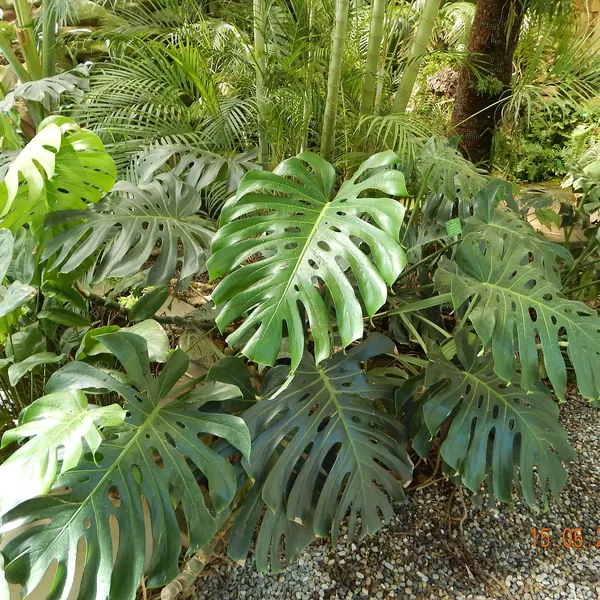
Plant profile
- Light
- Bright indirect light; tolerates medium
- Water
- When the top 2 in (5 cm) of soil is dry
- Humidity
- Average; likes 50%+
- Pets
- Toxic to cats and dogs (ASPCA) [ASPCA]
- Difficulty
- Easy
- Size
- Large: 6-8 ft indoors over years
- Growth
- Fast in bright light
Light
Bright indirect light; tolerates medium. Rotate the pot every few weeks so growth stays even.
Water
When the top 2 in (5 cm) of soil is dry. Always use a pot with drainage holes and empty the saucer after watering. Plants use far less water in winter.
Humidity and temperature
Humidity: average; likes 50%+. Most houseplants prefer 60-80°F (16-27°C) and dislike cold drafts and heating vents.
Soil and feeding
Use a well-draining potting mix with bark or perlite for air. Feed lightly in spring and summer with a balanced houseplant fertilizer at half strength; skip feeding in winter.
Our tip
Give it a moss or coir pole to climb; leaves grow larger and split more when the plant can climb.
Common problems
- Yellow leaves: Usually overwatering. Let soil dry 2 in down and check for mushy roots.
- No splits: Too little light or a young plant. Move closer to a bright window.
- Brown crispy edges: Low humidity or inconsistent watering.
Pets
Toxic to cats and dogs (ASPCA), according to the ASPCA plant list. If a pet chews it and shows symptoms, call your vet or the ASPCA Animal Poison Control Center. Check any plant in our Pet-Safe Plant Checker.
Ready to buy? See sizes, what to check and which shops list it.
Buy a monstera online