
Plant Library
Echeveria Care Guide
Echeveria spp.
By the Plantshop.com Editorial Team · Updated · How we research · Report an error
Echeverias are the rose-shaped succulents in shades of blue-green, pink and purple that fill most succulent arrangements. They need far more light than most homes give them.
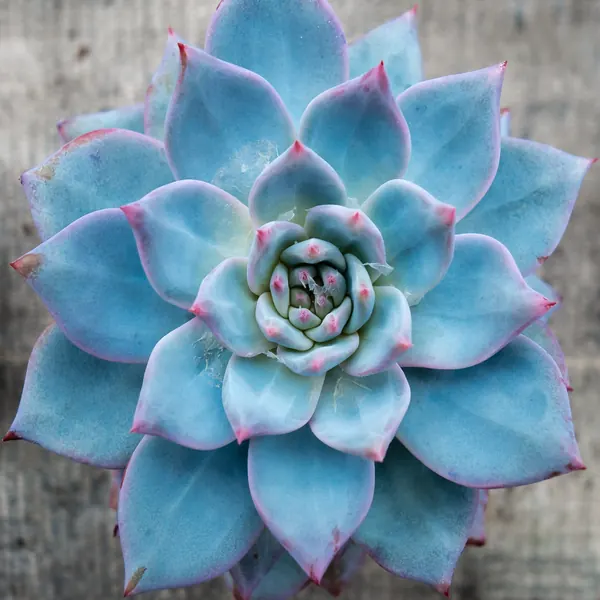
Plant profile
- Light
- Full sun to very bright light; a south or west window
- Water
- Soak, then wait until the soil is completely dry
- Humidity
- Low
- Pets
- Non-toxic to cats and dogs (ASPCA) [ASPCA]
- Difficulty
- Easy
- Size
- Rosettes 2-8 in across
- Growth
- Slow
Light
Full sun to very bright light; a south or west window. Rotate the pot every few weeks so growth stays even.
Water
Soak, then wait until the soil is completely dry. Always use a pot with drainage holes and empty the saucer after watering. Plants use far less water in winter.
Humidity and temperature
Humidity: low. Most houseplants prefer 60-80°F (16-27°C) and dislike cold drafts and heating vents.
Soil and feeding
Use a well-draining potting mix with extra grit or perlite. Feed lightly in spring and summer with a balanced houseplant fertilizer at half strength; skip feeding in winter.
Our tip
If the rosette starts to stretch and open up, it needs more sun; that stretching cannot be reversed, only regrown.
Common problems
- Stretching (etiolation): Not enough light.
- Mushy, translucent leaves: Overwatering.
- Shriveled lower leaves: Normal as it grows; remove dry ones.
Pets
Non-toxic to cats and dogs (ASPCA), according to the ASPCA plant list. Check any plant in our Pet-Safe Plant Checker.
Ready to buy? See sizes, what to check and which shops list it.
Buy an echeveria online