
Plant Library
Croton Care Guide
Codiaeum variegatum
By the Plantshop.com Editorial Team · Updated · How we research · Report an error
Crotons are grown for their leaves: red, orange, yellow and green, often on the same plant. The color is light-driven, so the brighter the spot, the more vivid the plant. Croton 'Petra' is the variety you will see most often.
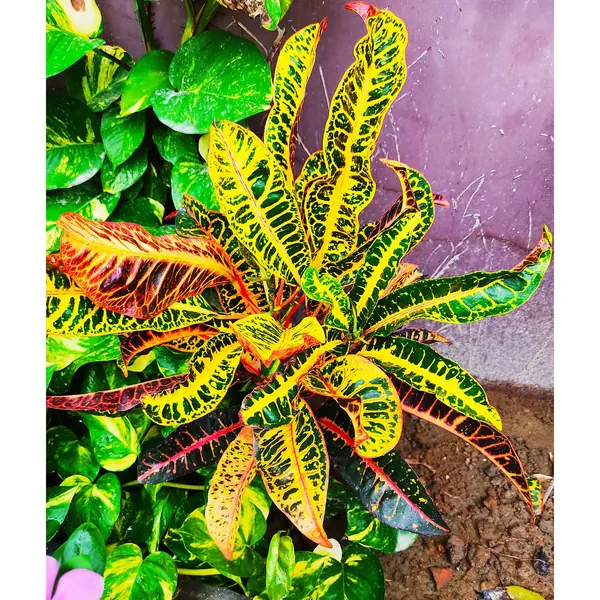
Plant profile
- Light
- Bright light with some direct sun; color fades in low light
- Water
- When the top 1/2 to 1 in of soil is dry; keep evenly moist, never soggy
- Humidity
- High; 50%+ keeps leaves clean
- Pets
- Poisonous (NC State Extension); its sap can irritate skin and mouths. Keep away from pets [ASPCA]
- Difficulty
- Moderate
- Size
- 2-4 ft indoors
- Growth
- Moderate
Light
Bright light with some direct sun; color fades in low light. Rotate the pot every few weeks so growth stays even.
Water
When the top 1/2 to 1 in of soil is dry; keep evenly moist, never soggy. Always use a pot with drainage holes and empty the saucer after watering. Plants use far less water in winter.
Humidity and temperature
Humidity: high; 50%+ keeps leaves clean. Most houseplants prefer 60-80°F (16-27°C) and dislike cold drafts and heating vents.
Soil and feeding
Use a well-draining potting mix with bark or perlite for air. Feed lightly in spring and summer with a balanced houseplant fertilizer at half strength; skip feeding in winter.
Our tip
Expect it to drop some leaves in its first weeks at home. That is shock from the move, not a dead plant. Keep it warm, bright and out of drafts and wait for new growth.
Common problems
- Sudden leaf drop: Move or temperature shock; also cold below about 50°F (10°C).
- Leaves turning green: Not enough light; move it to a sunnier window.
- Fine webbing: Spider mites, which love dry air. Rinse the leaves and raise humidity.
Pets
Poisonous (NC State Extension); its sap can irritate skin and mouths. Keep away from pets. Check the ASPCA plant list. If a pet chews it and shows symptoms, call your vet or the ASPCA Animal Poison Control Center. Check any plant in our Pet-Safe Plant Checker.
Ready to buy? See sizes, what to check and which shops list it.
Buy a croton online