
Plant Library
Bromeliad Care Guide
Guzmania and other bromeliads
By the Plantshop.com Editorial Team · Updated · How we research · Report an error
Bromeliads carry a bright red, orange, yellow or pink bract for two to four months. Each rosette flowers once, then produces pups that can flower in a year or two.
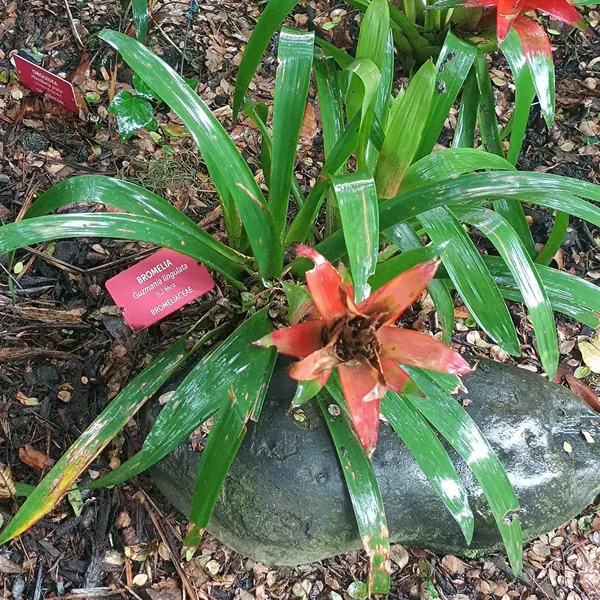
Plant profile
- Light
- Bright indirect light
- Water
- Keep the soil lightly moist; refresh water in the central cup every 1-2 weeks
- Humidity
- Medium to high
- Pets
- Non-toxic to cats and dogs (ASPCA) [ASPCA]
- Difficulty
- Easy
- Size
- 1-2 ft
- Growth
- Slow
Light
Bright indirect light. Rotate the pot every few weeks so growth stays even.
Water
Keep the soil lightly moist; refresh water in the central cup every 1-2 weeks. Always use a pot with drainage holes and empty the saucer after watering. Plants use far less water in winter.
Humidity and temperature
Humidity: medium to high. Most houseplants prefer 60-80°F (16-27°C) and dislike cold drafts and heating vents.
Soil and feeding
Use a well-draining potting mix with bark or perlite for air. Feed lightly in spring and summer with a balanced houseplant fertilizer at half strength; skip feeding in winter.
Our tip
After the bloom fades, the mother plant slowly declines; keep the pups growing at its base to get the next flowers.
Common problems
- Brown center: Normal after flowering, or rot from stale water.
- Pale leaves: Too much direct sun.
- No new pups: Too little light.
Pets
Non-toxic to cats and dogs (ASPCA), according to the ASPCA plant list. Check any plant in our Pet-Safe Plant Checker.
Ready to buy? See sizes, what to check and which shops list it.
Buy a bromeliad online